
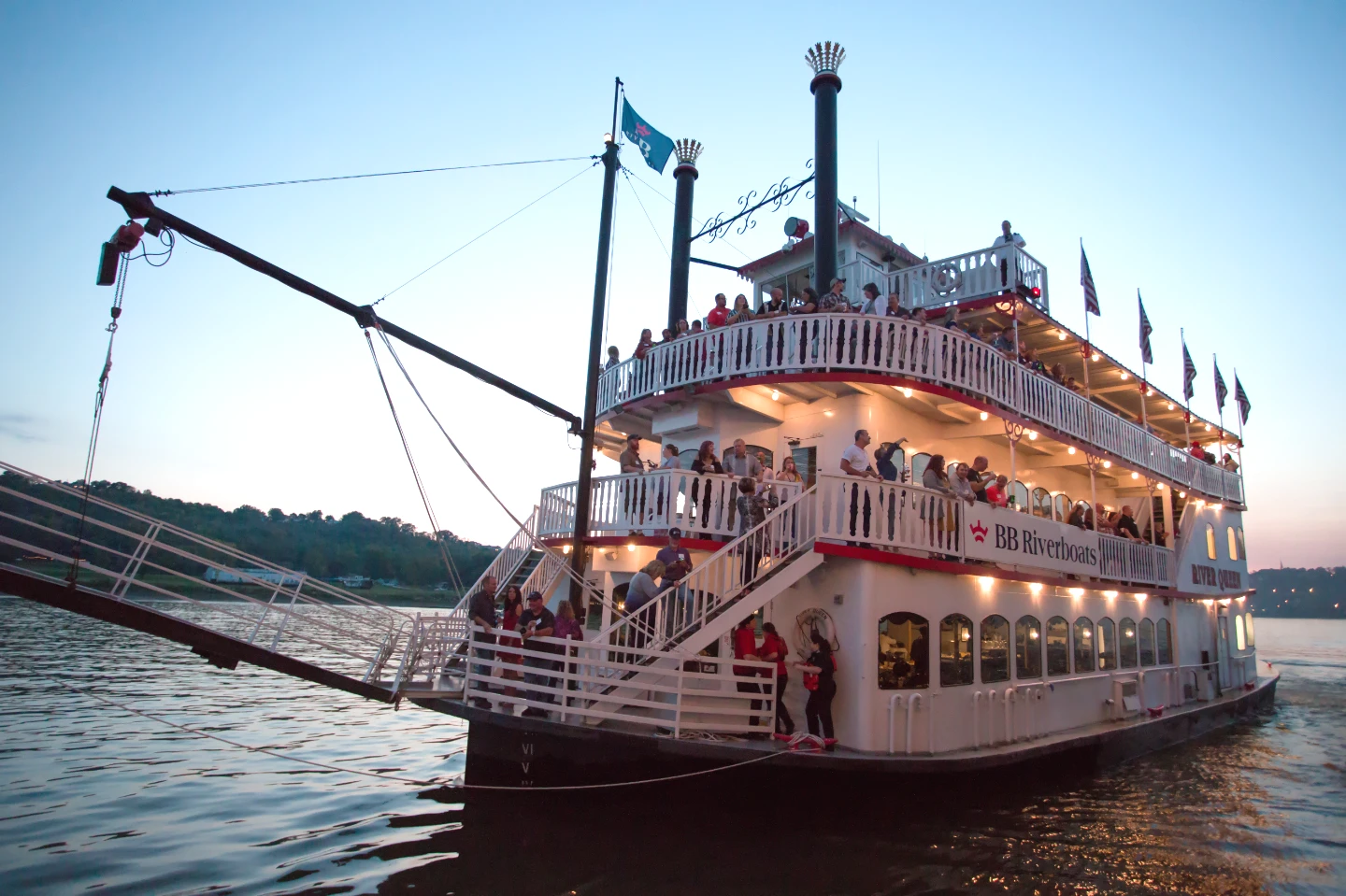
Riverfront venues do not behave like standard halls. Boarding rhythm, guest control, and the path between street and deck all change how the work must be written.
Newport Landing also sits in a cross-river event area, so the plan has to account for the route, the venue, and the surrounding district together.
That is the kind of venue detail that makes the section feel grounded instead of generic.
- Keep guest boarding separate from crew movement.
- Write the access path around the riverfront layout.
- Treat the boarding window as a hard schedule line.
- Plan for weather, water, and guest flow together.
- Make closeout easy for the waterfront team to absorb.
Boarding timing and access control
The first job is to keep boarding on time without letting crew access collide with guest movement. That means the plan needs a real access sequence, not a vague arrival window.
When the venue is on the water, the sequence matters even more.
Riverfront traffic and event rhythm
The waterfront changes the pace of the work. Traffic, weather, and the public space around the landing all affect how the team can stage and exit.
A good venue section explains those conditions instead of assuming a standard hall model.
Why the closeout needs discipline
The end of a riverfront event should be as calm as the beginning. Clear release timing and clean handoffs keep the waterfront from turning into a bottleneck.
That is what makes the venue usable again the next time.
About BB Riverboats / Newport Landing
BB Riverboats' official private-events materials say the company supports groups of 50 or more for corporate luncheons, weddings, and social gatherings.
The same official materials say the Belle of Cincinnati seats up to 225 guests, offers three climate-controlled decks, and includes river and city views.
Located at Newport Riverfront.
Running a project here means working against the venue's own exhibitor manual, dock windows, and service-order deadlines. Those details are confirmed before any build commits to fabrication.
What drives the Cincinnati calendar
Cincinnati is a working trade show market. Its anchor venues host hundreds of events a year, and the rhythm of load-in, show hours, and strike is well-established across the local vendor base.
Exhibitors pulling back on budget in Cincinnati still have to show up in the same booth neighborhoods as their competitors. Scope gets tighter; standards don't. The booths that land well are the ones built on a specific plan, not a standard layouts.
Xavier and NKU both actively market arena and conference inventory for conferences, fairs, banquets, and private events, giving the metro more event choices beyond hotels and convention centers.
Blue Ash, Sharonville, Liberty Township, and CVG-adjacent hotels actively market their own event inventory, supporting corporate meetings and overflow programs away from downtown — a useful reference point when sizing a project.
Operational rules on the Cincinnati floor
Cincinnati floor operations follow the venue's own manual. Dock timing, utility orders, rigging, and crew calls all come out of that document.
Practically, that means pulling the current exhibitor manual for every show and confirming a handful of items in writing: which tasks the venue's house crews cover, which tasks the show's general contractor covers, and what an exhibitor or their appointed contractor can handle without escalation.
Sharonville Convention Center — Utilities and labor services are obtained only through the venue's Service Order Form, banners are hung by convention-center staff only at prevailing labor rates, and off-window storage / drayage is handled through the show decorator or a local storage facility.
Practical planning rules for BB Riverboats / Newport Landing in Cincinnati: Use language such as 'venue-directed services', 'service order form', 'exhibitor kit review', 'event-planning guide', and 'show-site coordination aligned with the venue rules'. Treat Cincinnati as tri-state and mixed: downtown convention work, Sharonville expo work, NKY riverfront events, and stadium / university venues all behave differently.
Line items on a typical project
A full engagement covers scope development, fabrication or rental, graphics, show services, logistics, and on-site execution from move-in through dismantle.
Typical line items include booth structure (custom or rental), graphics and print, AV and lighting, show-service orders (power, internet, rigging), labor calls against the venue's rules, freight both ways, on-site supervision, and post-show closeout documentation.
Good execution comes from keeping the team small and the handoffs short. Every extra vendor in the chain adds a communication layer and a place where details get lost.
For programs that repeat, asset management becomes part of the engagement — storage, graphic rotation, refurbishment, and re-crating are planned rather than one-off.
Out of scope by default are show organizer fees, booth lease costs paid directly to the show, staff travel and per diems, and any custom software or data-capture tooling the client runs on its own stack. Those stay on the client side and plug into the project through coordination, not rebilling.
What an engagement actually looks like
First step on any project is pinning down the show, the floor plan, the deadlines, and what success actually looks like. Everything downstream hinges on those answers.
Once scope is clear, the venue work begins. Exhibitor manual, dock times, utility order IDs, rigging submissions for hanging elements, and labor calls all get locked against the venue's actual rules.
Production covers fabrication, graphics, AV spec, rentals, and crew chief assignment. It is the longest phase of most projects and the one where timelines are either protected or lost.
The install phase has one owner on the floor. That person handles the labor calls, the graphics questions, the sequence adjustments, and the daily update.
Show-hours coverage is part of every engagement — not a premium add-on. On-floor support keeps the booth running while the client team runs the pipeline.
Strike and closeout happen the same day. Storage labels, outbound manifests, vendor performance notes, and a written debrief go out within 24 hours of doors closing.
Pricing and scheduling
An honest quote itemizes the variables. There is not a single price — there is a configuration.
Six variables drive the cost: custom versus rental, booth footprint and complexity, venue-specific labor and rigging fees, graphics scope and substrate, freight distance and timing, and the number of on-site supervision days.
A clean schedule starts 4 to 5 months out for custom work and 2 to 3 months for rentals. Shorter lead times are workable but push rush premiums and limit material choices.
What a successful project looks like
A project runs well when install clears the venue's published window, all show services land as ordered, the booth performs across every show day without pulling the client team off pipeline work, and strike clears the dock before the next occupant loads in.
Most programs in Cincinnati are evaluated on lead-capture volume, meetings booked on the floor, and qualified-pipeline attribution after the show. The booth is a means to those numbers — it is not the number itself.
Client teams sometimes want the booth to carry the pipeline on its own, but the best-performing programs treat the booth as a platform and put real operators on it. On-floor conversation discipline moves the KPIs more than any scenic decision.
What makes our work different
Trade Show Services of Cincinnati operates out of Cincinnati with a full in-house production shop. Custom fabrication, rental inventory, graphics production, and show-site labor live under one roof.
Local fabrication means real-time problem-solving. A graphic that needs to be reprinted at 6 a.m. on install day is a same-morning fix, not a three-day shipping delay.
Consistency across show dates is the other reason to hire local. The same crew that built the booth runs the install, knows the pack-out, and catches the small things — a missing hardware pack, a graphic edge that needs reseating, a storage crate routed to the wrong bay — without needing the client team to intervene.
Frequently asked questions
What makes this riverfront venue different?
The boarding rhythm, the weather exposure, and the access path all change the work.
What should be handled first?
The guest boarding sequence and the crew access path.
Why does the landing need its own section?
Because a waterfront plan is not the same as a ballroom plan.
What keeps the venue brief useful?
It talks about the riverfront conditions that actually shape the event.
How does labor work in Cincinnati?
It runs venue by venue. Cintas Center: Xavier University's official events sections say Cintas Center events are supported by full-service planning, catering, and AV support. Other Cincinnati venues have their own published rules, and the plan matches the specific building.
How much lead time is ideal?
Custom builds run best with 16 to 20 weeks of lead time. Rentals take 8 to 12 weeks. Work inside 4 weeks is possible but raises costs and narrows the options.
What information kicks off a project?
The show, the venue, the booth number, the dates, and a target budget range. From those, an initial scope and a realistic cost come back within a few days.
Who runs the booth on-site?
One named show-site lead runs the install, the show hours, and the strike. That person carries the floor plan and the punch list from crates to doors and reports up once a day.
Can the booth travel to the next city on our calendar?
Yes — builds are designed for modular reuse unless single-use scenic is specifically required. Same structure, swappable graphics, standard crates. Cincinnati programs that roll to another city on the same calendar get handled end to end.
What happens if something breaks during show hours?
The show floor lead handles it. Minor repairs happen in place; anything larger gets sourced from the local fabricators or rerouted through the venue's service desk.