
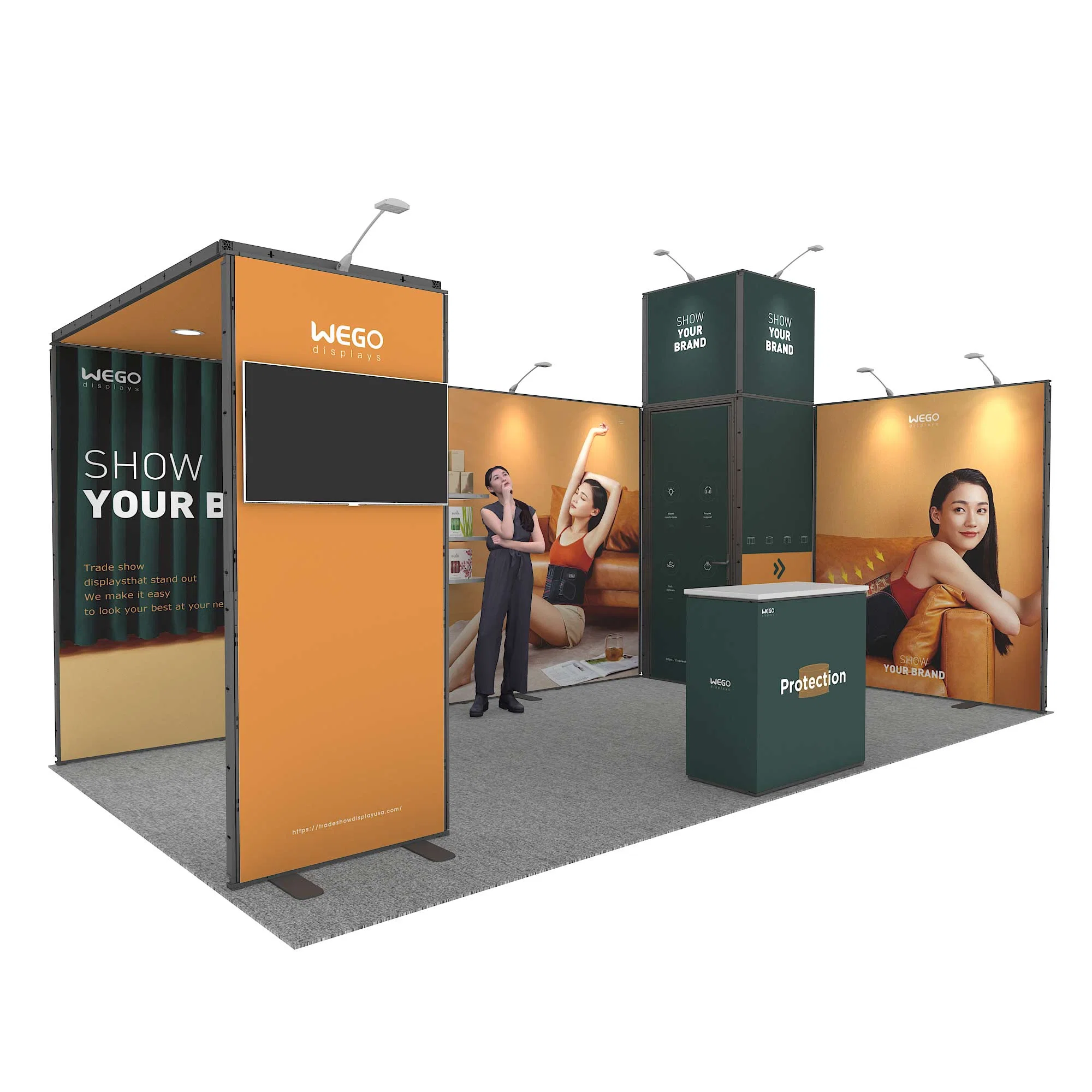
10x20 Inline Trade Show Booths changes how a Cincinnati team handles visibility, circulation, storage, staffing, and move-in sequencing. 10x20 Inline Trade Show Booths behaves like a real exhibit format with its own footprint, sightline, fabrication, install, and dismantle consequences. In rooms such as Sharonville Convention Center, the format affects where graphics land, how attendees circulate, and how much install time the crew needs before the floor opens.
10x20 Inline Trade Show Booths slips when the footprint, traffic pattern, rigging needs, and setup sequence are decided too late to affect fabrication and show-services ordering. Buyers usually need to decide whether 10x20 Inline Trade Show Booths is supporting demos, meetings, hospitality, lead capture, or pure brand presence, and that choice influences fabrication, freight, show services, and field supervision.
When the brief also touches Sharonville or programs driven by North-Corridor Trade and Public Shows, the format has to be matched to the room instead of chosen on looks alone. Booth geometry only becomes valuable once it is translated into a plan for traffic flow, storage, utilities, staffing positions, and strike.
That is why the strongest booth-format decisions happen early enough to influence design, service orders, and labor sequencing rather than being treated like a final visual choice after everything else is already moving.
- Start by matching the booth format to the actual footprint, aisle exposure, and venue rules before graphics, fabrication, or service orders are locked.
- Use Sharonville Convention Center to confirm height limits, rigging, utilities, and move-in sequencing before graphics and fabrication are finalized.
- Decide whether the booth needs storage, demos, meetings, hospitality, or lead-capture zones built into the plan from day one.
- Keep Trade Show Booth Design, labor timing, AV, graphics, and logistics aligned with the same booth concept.
- Assign show-site leadership before the crew arrives so open issues do not drift during install.
- Plan dismantle, returns, warehousing, and the next stop before the program opens.
Where 10x20 Inline Trade Show Booths works best in Cincinnati
10x20 Inline Trade Show Booths works best when the booth format matches the room, the traffic pattern, and the buyer objective. 10x20 inline booths are for teams that need enough space for product, meetings, and lead capture without moving into a larger island footprint. In Cincinnati that usually means checking whether the job is landing at Sharonville Convention Center, in Sharonville, or inside programs driven by North-Corridor Trade and Public Shows before the footprint is locked.
North-corridor expo schedules keep regional trade and public-show demand active in rooms that reward practical formats and disciplined setup pacing. That matters because 10x20 Inline Trade Show Booths can behave very differently in a downtown convention hall, a Sharonville expo program, or a ballroom-heavy conference schedule. A strong 10x20 Inline Trade Show Booths plan helps buyers translate exhibit geometry into better production, safer install sequencing, and a cleaner attendee experience.
Sharonville also shapes the plan. Primary suburban expo node with the convention center, hotel cluster, and free-parking advantage. That affects how teams think about freight paths, ceiling height, demo volume, hospitality, and the amount of booth infrastructure that can realistically be carried show to show.
When the room, audience, and buyer objective are aligned, the booth can do more than look strong. It can guide movement, hold better conversations, protect demos, and keep staff from improvising around a layout that never matched the way the space would actually be used.
- Best aligned with Sharonville Convention Center
- Often scoped around North-Corridor Trade and Public Shows
- Needs early decisions on frontage discipline, storage, demo placement, and clean messaging
- Usually paired with Trade Show Booth Design
Venue rules, labor posture, and show-floor constraints
Cincinnati should be treated as a mixed, venue-directed labor market. Downtown convention work, suburban expo facilities, NKY convention inventory, stadiums, and hotel venues each publish different ordering, AV, catering, and exhibitor-service paths. Final labor expectations should always be confirmed in the current exhibitor kit, service order form, private-event agreement, and organizer manual. Sharonville expo work usually depends on service-order timing, decorator coordination, dock discipline, and venue-managed utilities that affect how booth plans are staged. For 10x20 Inline Trade Show Booths, those conditions shape what can be hung, what needs floor power or internet, how wide the open sides really need to stay, and how much time the crew gets to finish detailing before attendees arrive.
Sharonville Convention Center is a useful reference point because Sharonville expo work usually rewards practical booth formats, faster setup, disciplined service ordering, and cleaner reuse across repeat events. Sharonville expo work usually depends on service-order timing, decorator coordination, dock discipline, and venue-managed utilities that affect how booth plans are staged.
10x20 Inline Trade Show Booths slips when the footprint, traffic pattern, rigging needs, and setup sequence are decided too late to affect fabrication and show-services ordering. In practice, that means height, storage, demo placement, meeting pockets, graphics, and sightlines all need to be settled against the actual room before the layout is committed.
The mistake is to treat booth type as a pure design preference. In live rooms, format decisions affect crew pace, safety, service ordering, attendee movement, and how polished the environment feels once the first wave of traffic hits.
How the format is planned before fabrication
The first decision is how 10x20 Inline Trade Show Booths needs to perform once people are in the booth. Frontage discipline, storage, demo placement, and clean messaging across a standard inline depth are what make the format work. That drives whether the job needs custom fabrication, modular reuse, lighter-weight components, hanging signage, integrated AV, or more deliberate product-display planning.
Trade Show Booth Design becomes important here because the design, graphics, freight, utilities, and install path have to support the same booth concept. If those choices are split too late, the team ends up revising structure, reordering services, or compressing install time to solve problems that should have been caught in the brief.
A cleaner approach is to confirm the venue, show date, service mix, and booth objective early enough to make structural and graphic decisions once. That is where 10x20 Inline Trade Show Booths turns from a rough preference into a real production plan.
That production plan should also account for procurement pace, returns, repair tolerance, and the level of finish the buyer expects once the booth is photographed, staffed, and used under live show conditions.
Live use, staffing, and strike
Once the show opens, 10x20 Inline Trade Show Booths has to support the way staff, attendees, demos, and meetings actually move through the space. 10x20 inline booths are for teams that need enough space for product, meetings, and lead capture without moving into a larger island footprint. That affects staffing positions, where leads are captured, how product stories are sequenced, and whether the booth feels open or congested during peak traffic.
Field leadership matters because open booths expose more of the working details. Power drops, cable paths, AV cues, giveaway storage, replenishment, and cleanup become more visible when the format is designed to be accessed from multiple sides or from a more exposed aisle line.
Strike needs the same level of planning. Freight return timing, asset packing, reuse decisions, and venue close-out usually move faster when the booth was designed with dismantle in mind instead of only with opening look-and-feel in mind.
That is especially true when the same booth has to move again soon. Format decisions that save time on install but create confusion during strike usually cost the team later through damaged assets, chaotic packing, or a slower reset for the next event.
Budget, reuse, and the next show
Buyers usually weigh 10x20 Inline Trade Show Booths against three things: cost, flexibility, and visual impact. A strong 10x20 program can usually be re-skinned or reconfigured for repeat shows without starting over each time. In Cincinnati, the right answer often depends on whether the next stop is another downtown convention, a Sharonville expo program, a hotel conference, or a broader regional run.
Sharonville and Sharonville Convention Center are useful reference points because they show how the same booth idea behaves under different venue rules, loading conditions, and audience patterns. That is the difference between a booth that only looks good in one room and a program that can actually travel.
The strongest plans keep the format realistic. They protect the visual goal, account for venue constraints, and make the next install easier instead of turning every show into a partial redesign.
Buyers usually benefit most when the booth earns its footprint twice: once through better live performance and again through cleaner reuse, faster setup, or a simpler adaptation path when the next brief changes size or venue type.
What usually separates a strong booth plan from a weak one
Strong booth plans feel deliberate before the first piece is built. The team knows what the booth is trying to do, how the room will support it, where utilities land, what storage is required, how staff will work the space, and what the strike path looks like before the show opens.
Weak booth plans usually reveal themselves when the geometry looks good in isolation but the live room immediately exposes the missing decisions. Traffic stalls, graphics fight the sightlines, storage is too small, demos have nowhere to breathe, or the crew has to improvise around utilities that should have been solved weeks earlier.
The difference is rarely luck. It is usually the result of whether the booth type was chosen early enough to shape production decisions instead of late enough that everyone else had to work around it.
What buyers usually sort out next
After choosing 10x20 Inline Trade Show Booths, the next decision is usually whether Sharonville Convention Center is the right room for it, whether Trade Show Booth Design needs to be scoped immediately, and whether the routing through Sharonville changes install or hotel planning.
That is where the surrounding Cincinnati topics help. Venue planning clarifies room pressure. Location planning frames routing and submarket behavior. Service planning makes it easier to decide who owns booth design, fabrication, logistics, labor, and onsite leadership once the brief moves into production.
The practical goal is to turn 10x20 Inline Trade Show Booths from a broad format preference into a workable Cincinnati plan with the right room, the right service stack, and the right execution sequence.
The Cincinnati event landscape
Cincinnati runs one of the busiest trade show calendars in the region. Convention weeks stack close together, hotel blocks compete for the same nights, and the venues themselves shape what is possible on the floor.
The attendees vary by show — some weeks draw regional operators, others pull international buyers in for a single conference — but the floor mechanics stay consistent. Every booth needs graphics production, show services, labor calls, and a plan for the specific building it's landing in.
Newport Aquarium, Drees Pavilion, BB Riverboats, and NKYCC all market waterfront or skyline-driven event experiences that pair well with sponsor programs and client entertainment, which sets the practical ceiling for a booth program working the market.
the convention center grand reopening was January 2026 and Elm Street Plaza opened in November 2025, making the downtown convention district a current development story rather than a stale legacy venue pitch.
Cincinnati neighborhoods and event districts
The Butler County Growth Corridor area runs through West Chester, Liberty Township, Mason, Fairfield. Corporate growth, highway access, and hotel meeting space make this a practical planning zone for regional sales meetings and overflow conference work.
Northern Kentucky Riverfront runs across Covington, Newport, Bellevue. The NKY convention center, connected Marriott, aquarium, riverboats, arena, and skyline venues give the riverfront a distinct but integrated event identity.
How Cincinnati floor operations work
Labor in Cincinnati runs venue-by-venue, not citywide. Each building publishes its own rules for who handles what on the floor.
The workable version of Cincinnati labor planning is boring on purpose: read the manual, match the scope to its categories, order what the venue sells directly, and schedule everything else around its posted windows. Surprises almost always trace back to a step someone skipped.
Cintas Center: Xavier University's official events sections say Cintas Center events are supported by full-service planning, catering, and AV support.
Practical planning rules for 10x20 Inline Trade Show Booths in Cincinnati: Treat Cincinnati as tri-state and mixed: downtown convention work, Sharonville expo work, NKY riverfront events, and stadium / university venues all behave differently. When copy references labor, tie it to the venue, the services team, the exhibitor portal, or the event manual instead of a blanket metro-wide claim.
The buildings that host Cincinnati events
Different Cincinnati venues mean different floor plans, different labor rules, and different freight realities.
The right building depends on the show: a consumer expo wants open aisles and broad traffic flow; a corporate conference wants controlled breakout space; a brand activation wants a venue that can carry scenic and production without fighting the architecture.
Great American Ball Park: the newly renovated space spans 45,000 square feet and can accommodate cocktail receptions up to 6,000 guests or rounds up to 750 guests.
The Reds also market the Champions Club as the ballpark's largest climate-controlled premium space.
Drees Pavilion is one of the anchors. The venue is a 10,000-square-foot pavilion located minutes from downtown Cincinnati.
What's included in the project scope
Project scope usually spans design, fabrication, graphics, AV, labor coordination, freight, install, show-hours support, and strike.
Typical line items include booth structure (custom or rental), graphics and print, AV and lighting, show-service orders (power, internet, rigging), labor calls against the venue's rules, freight both ways, on-site supervision, and post-show closeout documentation.
A well-run project has few surprises on install day because the handoffs upstream were tight. A bad one has many, because they weren't.
For programs that repeat, asset management becomes part of the engagement — storage, graphic rotation, refurbishment, and re-crating are planned rather than one-off.
A clean scope definition also calls out what isn't included: show organizer fees, client staff travel, and anything the client already has under contract (lead capture platforms, CRM integrations, promotional giveaways). Those run alongside the engagement rather than inside it.
How a project runs
Every project starts with a scope conversation: the show, the venue, the booth number, the dates, and the budget frame. Ten minutes of specifics produces a better plan than a week of generalities.
Once scope is clear, the venue work begins. Exhibitor manual, dock times, utility order IDs, rigging submissions for hanging elements, and labor calls all get locked against the venue's actual rules.
Production brings the plan into physical form: fabrication, graphics, AV, rentals, and the named lead who will run the floor.
One named show-site lead runs the install. Not a rotating crew and not a remote account manager — one person holds the floor plan, the punch list, and the labor calls from crates to doors.
Show-hours coverage is part of every engagement — not a premium add-on. On-floor support keeps the booth running while the client team runs the pipeline.
Closeout is tight: strike, crate, manifest, storage designation, and a written post-show report delivered within a day. That document drives the next booking.
What it costs and how fast it moves
An honest quote itemizes the variables. There is not a single price — there is a configuration.
Cost scales with how it is built, how big it is, what the venue charges for its own services, what the graphics look like, how far the crates travel, and how many days the team stays on-site.
On timing: custom builds for Cincinnati shows run best with 16 to 20 weeks of lead time. Rental programs run on 8 to 12. Anything inside 4 weeks is a rush, which means fewer options and a premium on materials.
What a successful project looks like
A project runs well when install clears the venue's published window, all show services land as ordered, the booth performs across every show day without pulling the client team off pipeline work, and strike clears the dock before the next occupant loads in.
Trade show ROI is measured at the lead and pipeline level. The show-floor execution either protects or undermines those numbers.
The post-show debrief is where the numbers get connected back to the physical booth. Which demo station drew traffic, which meeting area closed more conversations, which graphic zone attracted dwell time — that feedback shapes the next build rather than getting lost.
How we're built to run your project
Trade Show Services of Cincinnati is Cincinnati's local trade show team, with in-house design, fabrication, graphics, and show-site crews. One shop, one point of contact, one accountable lead on every project.
Local fabrication means real-time problem-solving. A graphic that needs to be reprinted at 6 a.m. on install day is a same-morning fix, not a three-day shipping delay.
Clients who run repeat programs across multiple dates end up paying less per event when the same team handles everything. Less re-briefing, less re-training, less re-checking — the operational overhead drops year over year.
Frequently asked questions
How is 10x20 Inline Trade Show Booths scoped for Cincinnati trade show work?
10x20 Inline Trade Show Booths is scoped by tying venue conditions, buyer goals, labor timing, graphics, AV, logistics, and show-site leadership into one shared plan so the full project stays coordinated. In practice, that means the decision has to be useful once the team is inside a real room with real deadlines, not just persuasive while the brief is still abstract.
Can this support work at Sharonville Convention Center?
Yes. Trade Show Services of Cincinnati can frame the plan around buildings such as Sharonville Convention Center. That matters because the same 10x20 Inline Trade Show Booths decision can look very different once access, utilities, room flow, and service timing are taken into account. The room changes what feels efficient, what feels overbuilt, and what has to be decided before the crew arrives.
Why does Sharonville matter here?
Sharonville matters because it affects routing, venue choice, hotel behavior, and how teams move through the wider Cincinnati market. Those local differences change staffing, timing, and venue strategy in ways buyers usually feel right away. Even when the commercial objective is the same, the work can demand a different pace once the submarket changes the path crews, freight, and attendees have to follow.
What makes 10x20 Inline Trade Show Booths relevant for North-Corridor Trade and Public Shows programs?
North-Corridor Trade and Public Shows programs usually need message clarity, venue readiness, timing discipline, and polished execution at the same time. 10x20 Inline Trade Show Booths is relevant because it changes how those priorities are translated into a workable production plan. This focus area only becomes useful when it helps the buyer understand how the room, the support stack, and the live execution plan should adapt to those priorities.
What information helps move the conversation forward?
Share the venue, show date, service mix, footprint or room type if known, and the business goal behind the program. That is usually enough to identify which venue, service, location, and next-step planning decisions should come first. Once those inputs are real, the brief can move from broad interest into a sequence the team can actually run.
Do you work at Drees Pavilion?
Yes. the venue is a 10,000-square-foot pavilion located minutes from downtown Cincinnati. Projects at that building are planned against its specific floor rules.
How does labor work in Cincinnati?
It runs venue by venue. At Sharonville Convention Center, utilities and labor services are obtained only through the venue's Service Order Form, banners are hung by convention-center staff only at prevailing labor rates, and off-window storage / drayage is handled through the show decorator or a local storage facility. Other Cincinnati venues have their own published rules, and the plan matches the specific building.
How much lead time is ideal?
Custom builds run best with 16 to 20 weeks of lead time. Rentals take 8 to 12 weeks. Work inside 4 weeks is possible but raises costs and narrows the options.
What information kicks off a project?
The show, the venue, the booth number, the dates, and a target budget range. From those, an initial scope and a realistic cost come back within a few days.
Who runs the booth on-site?
One named show-site lead runs the install, the show hours, and the strike. That person carries the floor plan and the punch list from crates to doors and reports up once a day.
Can the booth travel to the next city on our calendar?
Yes — builds are designed for modular reuse unless single-use scenic is specifically required. Same structure, swappable graphics, standard crates. Cincinnati programs that roll to another city on the same calendar get handled end to end.
What happens if something breaks during show hours?
The show floor lead handles it. Minor repairs happen in place; anything larger gets sourced from the local fabricators or rerouted through the venue's service desk.